
We have a big team full of committed people, and we're good at delivering technology projects. Still, work takes a long time, big projects don't succeed, the people we serve are frustrated, and the business side and the technology side rub against each other.
Does this feel familiar?
- The request queue that never gets shorter.
- The timeline that gets re-estimated halfway through.
- The project that lands on time and on budget, and the partner is still unhappy.
- IT as a black box that closes tickets.
The people aren't the cause. The model is. We work as a vendor to a client: they bring requirements, we estimate, negotiate and deliver. That works for fixed things like hardware. It breaks for services that keep changing, serve many people, and start with unknown needs.
Maybe 10% of what you do changes. But change your heading a few degrees and you land somewhere else entirely.
One person's week
Before
A counter clerk at a DMV field office. It's Wednesday and she has just sent the eighth person this week home: the copy of his birth certificate isn't one the state accepts, and nothing he read before coming in told him that. He took the morning off work for this. She tells her supervisor, who emails IT. Nothing comes back. The next time she has an idea, she tells a coworker instead.
After
January 15. She types one line into the intake form: “Show a document checklist before someone comes in for a new license.” Tuesday the 21st, the team's weekly triage reads it, calls it an idea for improvement, and tags it to a goal the whole roadmap is built around: nobody should need two trips for a standard license. She hears back that week, in plain words, with what happens next.
At the next quarter's planning the idea becomes an Initiative, and the product manager and the researcher come to her office to listen before anyone designs anything. A checklist gets prototyped and dropped: people didn't trust it. The thing that gets built instead lets an applicant send a photo of the document before the visit and hear within two business days whether it will be accepted. She is one of the field office staff invited to the sprint review where it's shown.
When it ships, the release note goes to her too. On the appointment record she can now see which documents were already checked. The eighth person that week stops happening.
The same thread, artifact by artifact, is in Shared terms and artifacts.
Six shifts
Digital services changes where you start. Six shifts, each with an everyday comparison, because the idea lands faster than the argument does.
From outputs to outcomes
Success is the change you create, not the thing you shipped.
“We launched online renewal on schedule, all requirements met” is an output. “Six months later, three quarters of renewals are done online in under five minutes” is an outcome. “We built what you asked for” becomes “we achieved the outcome you need.”
From incremental to iterative
Deliver something that works early, then make it better.
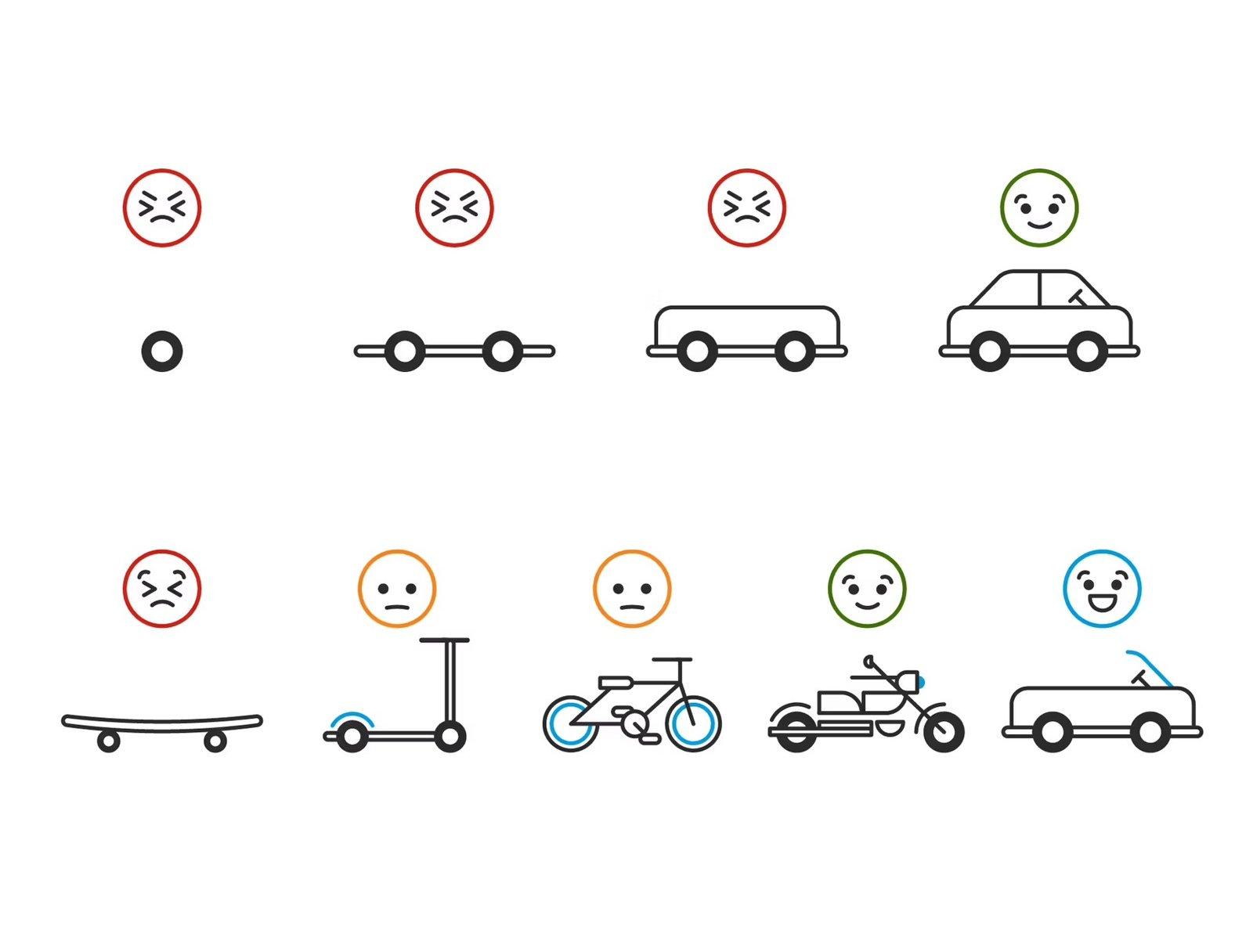
Wheels, then chassis, then engine, then body, usable in month eleven. Against that: skateboard, scooter, bike, motorcycle, usable in week two. Wheels are a component. A skateboard is something you can ride. Beware agile in name only, a faster assembly line that still builds the wrong car if the plan was wrong.
From order takers to collaborative partners
Partners bring problems and goals. The team figures out how.
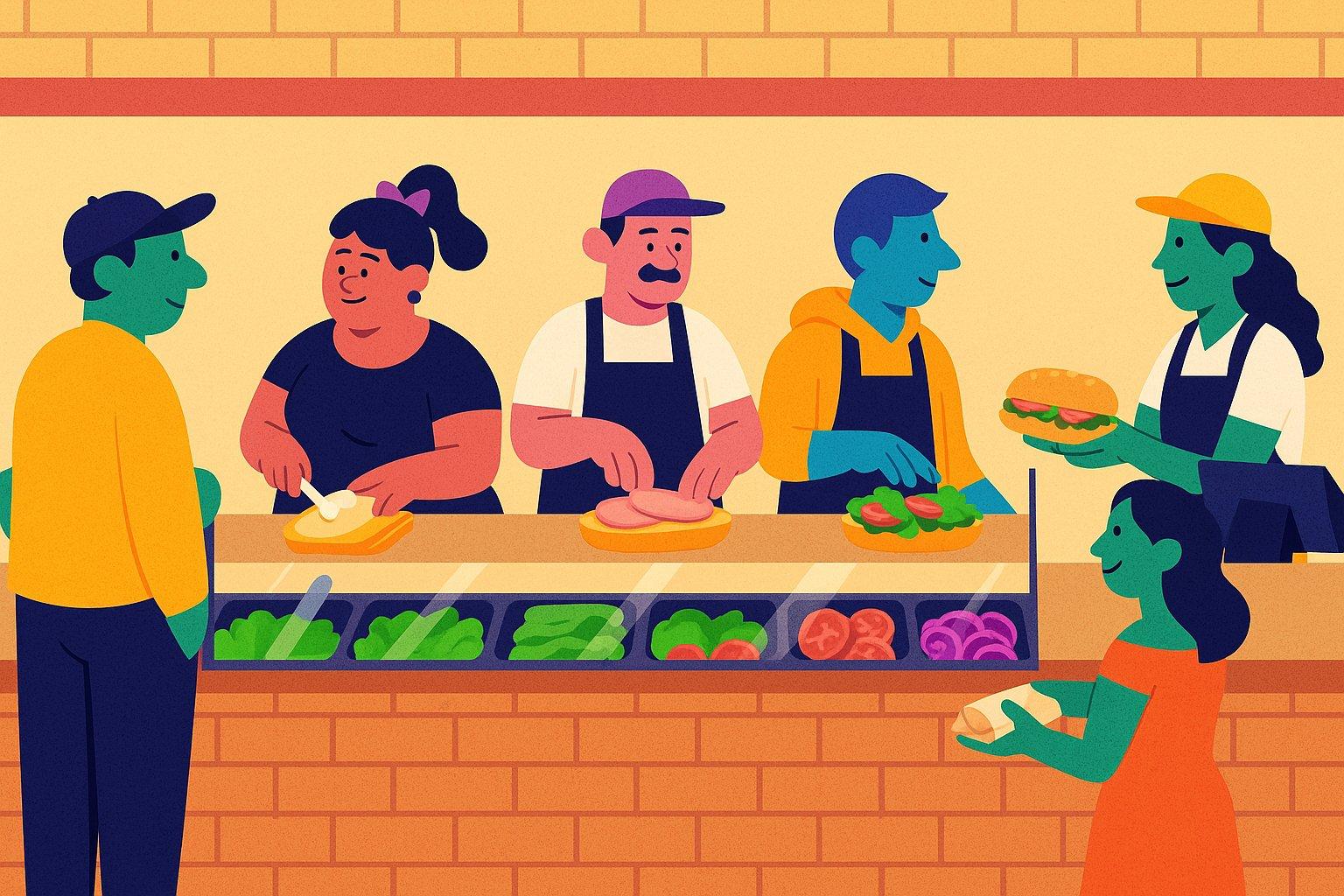
The sandwich line is great at filling orders. The soccer team has a fixed goal and a path that changes every few seconds. Both are skilled; they're built for different work. The question changes from “what features, by when?” to “what problem are you solving, and what does success look like?”

From requirements to feedback
Learn what people need by putting working things in their hands.
The skateboard teaches whether they need transportation at all. The scooter teaches speed. The bike teaches cargo. Each increment answers questions a conversation can't. Some requirements are real: security, compliance, integration. Separate those from habits dressed up as requirements.
From competing priorities to clear direction
One accountable lead, inside the team, sets the order of work.
Today several people each hold a “number one” priority and the team picks by biggest fire. There is no single direction of forward. One conductor; the section leaders still contribute.


From indirectly to directly serving the community
We still serve staff, in service of the community. “We help you serve the community” replaces “we do what you tell us.”
Residents use the website directly, so see the service from their side: not the IT window at the back of the office, but side by side at the public counter, helping the same person.

Only 10% is different
Most of this won't feel new. The 10% that is sits at the foundation: each shift changes where you start, not the skills you use. Two ships leave the same port ten degrees apart and reach different islands.

The whole story, with the questions people ask and how growth feels, is Why digital services.
Start Monday
One team, one quarter. Go in order, and don't skip the first step to get to the team faster: a team that hears the model before its managers have agreed to it will be told two different things in the same week.
- 1Leaders. Agreement on the why. A named steering group and advisory group. A date for the first direction review.
- 2Partners. They know how to work with the team: how requests get an answer, when planning happens, what they will hear and when.
- 3The team. The vision, the roles, what starts now, and the red flags written down.
- 4A working agreement. Written as situations in time order, updated whenever someone hits a confusion point.
- 5Each practice, the week before the team first uses it. Training weeks ahead is wasted; people forget it before they need it.
Treat the first quarter as a rehearsal. Commit anyway: teams new to planning don't know how to commit yet, and committing is how they learn. Say what isn't ready at the start of the planning week.
What “working” looks like, by when
- The kickoff
- Steering and advisory groups named. Every request channel points to one intake form.
- The first quarter starts
- Triage has run at least twice and every requester heard back. Quarterly commitments are written and each person committed out loud.
- Sprint 1 review
- The first sprint report row exists, with a sprint goal and a yes or no.
- The first month
- The first steering and advisory meetings have happened and changed something you can point to.
- The end of the quarter
- The quarter review has marked each commitment Done or rolled forward. The team has held a retro on the system itself.
If one of these is missing, that is where to spend the next two weeks. The sequence, the rehearsal and the retro on the system itself are Leading the change.
If you brought someone along
Three decks, one for each room, with the speaker notes and a PDF. Each says what the session should leave behind.
- 1Leadership sessionFrom Request Fulfillers to Outcome OwnersFor executive steering group, functional managers. Leaves behind: Agreement on the why. A named steering group and advisory group. A date for the first direction review.19 slides
- 2Partner introductionA New Way of WorkingFor advisory group, partner managers, frequent requesters. Leaves behind: Partners know how to work with the team: how requests get an answer, when planning happens, what they will hear and when.30 slides
- 3Team kickoffTeam Kickoff: A Vision for Our FutureFor the whole team. Leaves behind: The vision, the roles, what starts now, and the red flags written down.36 slides
All of this came out of years of doing it inside government, after a long stretch doing it in a software company, and then relearning it with AI. The story of how is here, if you want it. It's not required reading.