Partner introduction
A New Way of Working
For advisory group, partner managers, frequent requesters. What it should leave behind: Partners know how to work with the team: how requests get an answer, when planning happens, what they will hear and when.
Teaches 02 Why digital services, 08 Request triage and the idea log.
30 slidesDownload the PDF
Where IT is today, the client-vendor model, and when it fits.
1Open conversationally. This is a conversation starter with our partners: what we see today, a different way of working together, and what it asks of you and of us.
- 2
Only one line gets a check mark: a big team full of committed people. The people aren't the problem. Let the partners in the room nod; they live with the rest.
- 3
Pause here. This is the question the rest of the deck answers.
- 4
Output is what we ship. Outcome is what changes for people because of it. "We built what you asked for" becomes "we achieved the outcome you need."
- 5
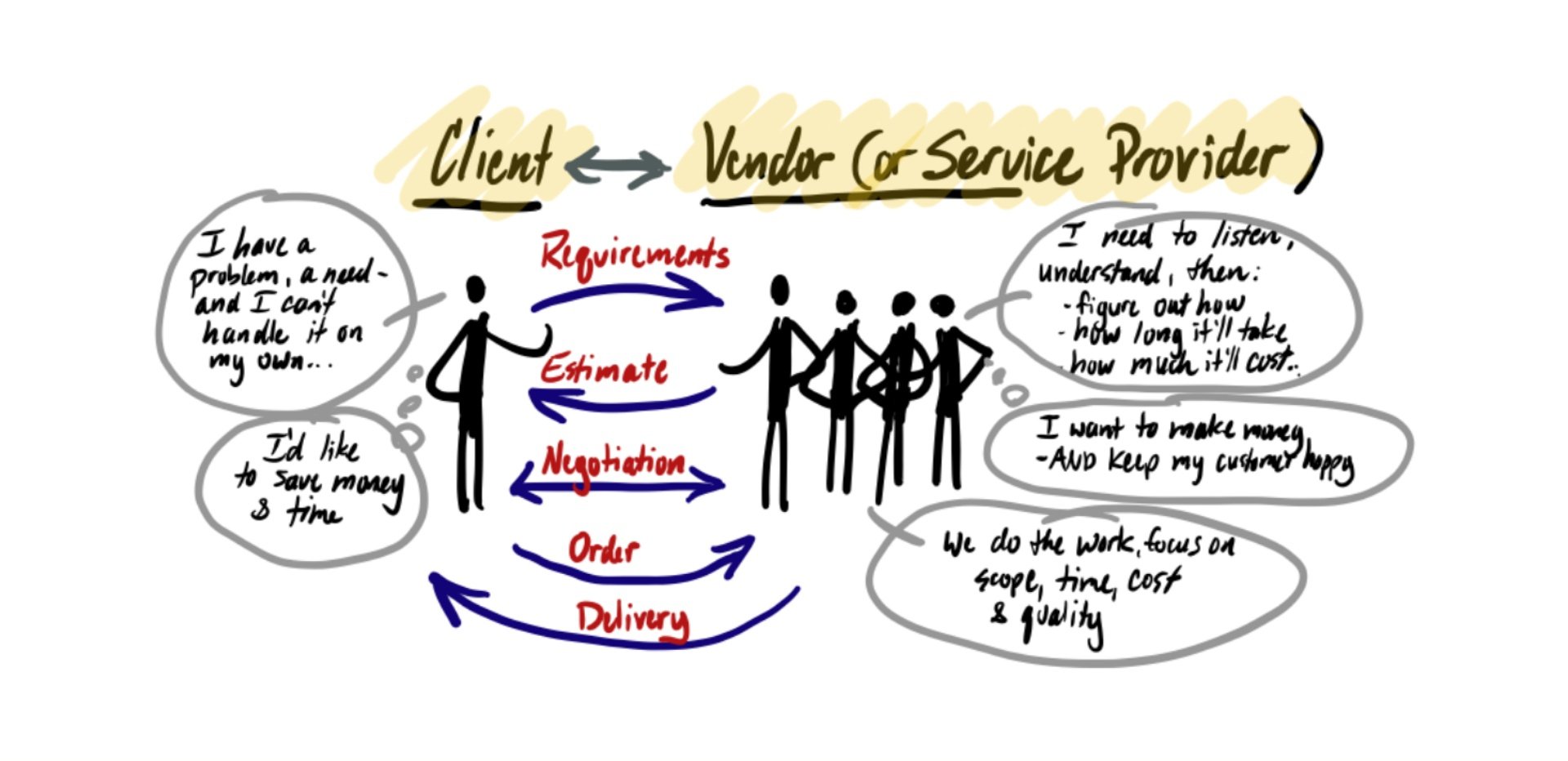
Walk the sketch. Client: "I have a problem and I can't handle it on my own. I'd like to save money and time." Vendor: "I need to listen, then figure out how, how long, how much." Then requirements, estimate, negotiation, order, delivery.
- 6
This is the fit question, and it's the honest center of the deck. Client-vendor isn't wrong; it fits fixed work with one client and clear requirements. Services that keep changing, serve many people and start with unknown needs need a different way of working.
- 7
Use the pug. That face is the room's reaction: skeptical, fair, and the right starting place.
Digital services: four tenets and a new way of working, with proof it works.
8Digital services is a working model, not a team name or a technology. The next slides are its four tenets.
- 9
Four tenets. The fourth is where partners come in, so spend a beat there.
- 10
For partners this means we'll ask to talk to the people who use the service, not only to the person who made the request.
- 11
Each goal on the roadmap is a change in what people do, with a starting value and a target. Partners help us pick those measures and see them move.
- 12
Partners bring the problem and the goal; the team works out how. That includes saying "a Microsoft Form solves this" when building software would be the wrong move.
- 13
This is the slide for this audience. The rest of the deck shows what partnering looks like in practice: your part in each step, how to bring us a request, and what you'll hear and when.
- 14
This flow fits when the problem and the answer are both clear. Trouble starts when the solution is decided before anyone has looked closely at the problem.
- 15
The question changes from "what do you want built, by when?" to "what problem are you solving, and what does success look like?" Sometimes the answer is a Microsoft Form, and sometimes it's not building anything.
- 16
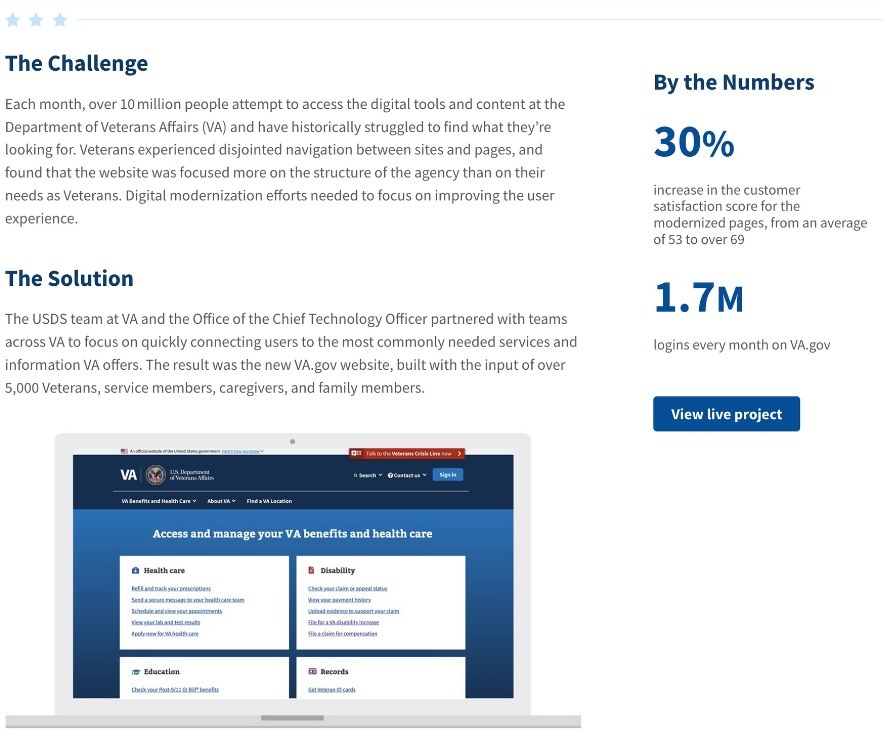
The VA story from the earlier version. Federal digital service teams changed significantly in 2025; check the example still holds before presenting, or swap in a state or regional one.
- 17
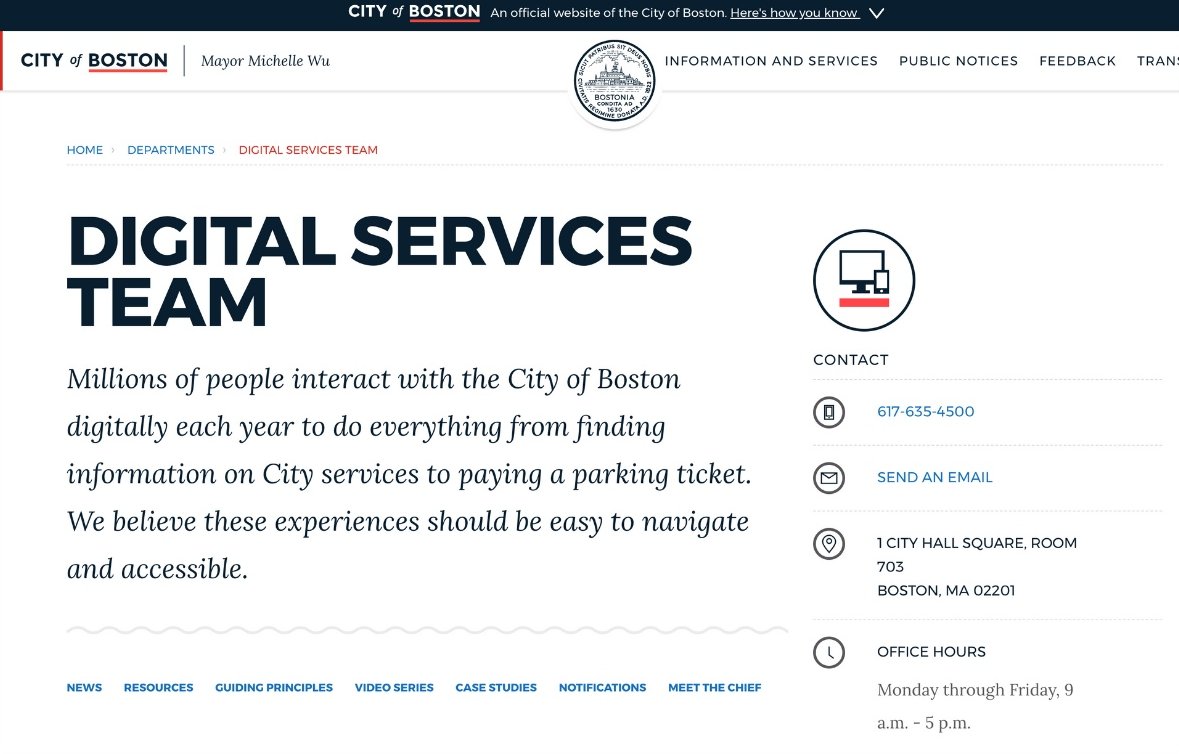
City digital service teams. A local example would land better with your partners if you have one.
Who does what, and the eight steps grouped in four stages, with the partner's part in each.
18Now the practical part: who you'll work with, the steps, and your part in each.
- 19
Updated from the earlier version's four roles to the roles the system uses. The technical architect and scrum master also work with the team, mostly behind the scenes for partners. Steering and advisory groups come up on the "what you'll hear" slide.
- 20
The earlier version showed Discover, Define, Design, Deliver and Enable, adapted from 18F. The system now uses eight steps; the four stages are only labels for grouping them. Discovery happens inside each piece of roadmap work, not once at the start.
- 21
Replaces the earlier version's "Discover the current state" and "Define the future state" slides. The earlier version's lean canvas and roadmap screenshots are gone; the DMV roadmap, the filled example in the roadmap template, can go here.
- 22
Combines the earlier version's "Discover the current state" research bullets with "Design the solution." "Don't build" is a successful result of discovery, not a failure.
- 23
From "Deliver iteratively." The cumulative-outcome diagram from the earlier version is redrawn as build, release, review.
- 24
From "Enable partners and users." Enable starts while the team is still building, not after launch.
How partners bring us requests, what they will hear and when, and the loop that repeats.
25New section, built from doc 08. This is the part partners will use most.
- 26
Future consideration comes after the product manager reviews a large request or idea. It's there so nobody waits on a reply that isn't coming. A "no" with a reason builds more trust than silence. Bugs don't go through this review; they go straight to the team and urgent ones are fixed right away.
- 27
Most large requests arrive as a solution with a deadline: "we need a portal by July." The problem underneath is usually smaller or different.
- 28
This replaces "communicate frequently (meetings and reports)" with the actual rhythm. Steering also meets monthly; partners usually hear its decisions through the roadmap and sprint reports.
- 29
The loop from the earlier version, on the four stages. Measuring the outcome feeds the next round of delivery; what we learn, and the next request, starts the loop again at Define.
- 30
An earlier version closed with a city email address; replace the placeholder with your team's email or intake link.