The system13Draft
Team rhythm
A lot of product work is staying in sync with other people. This page lists the meetings a digital services team holds, how often, who comes, and which part of the roadmap each one updates.
When
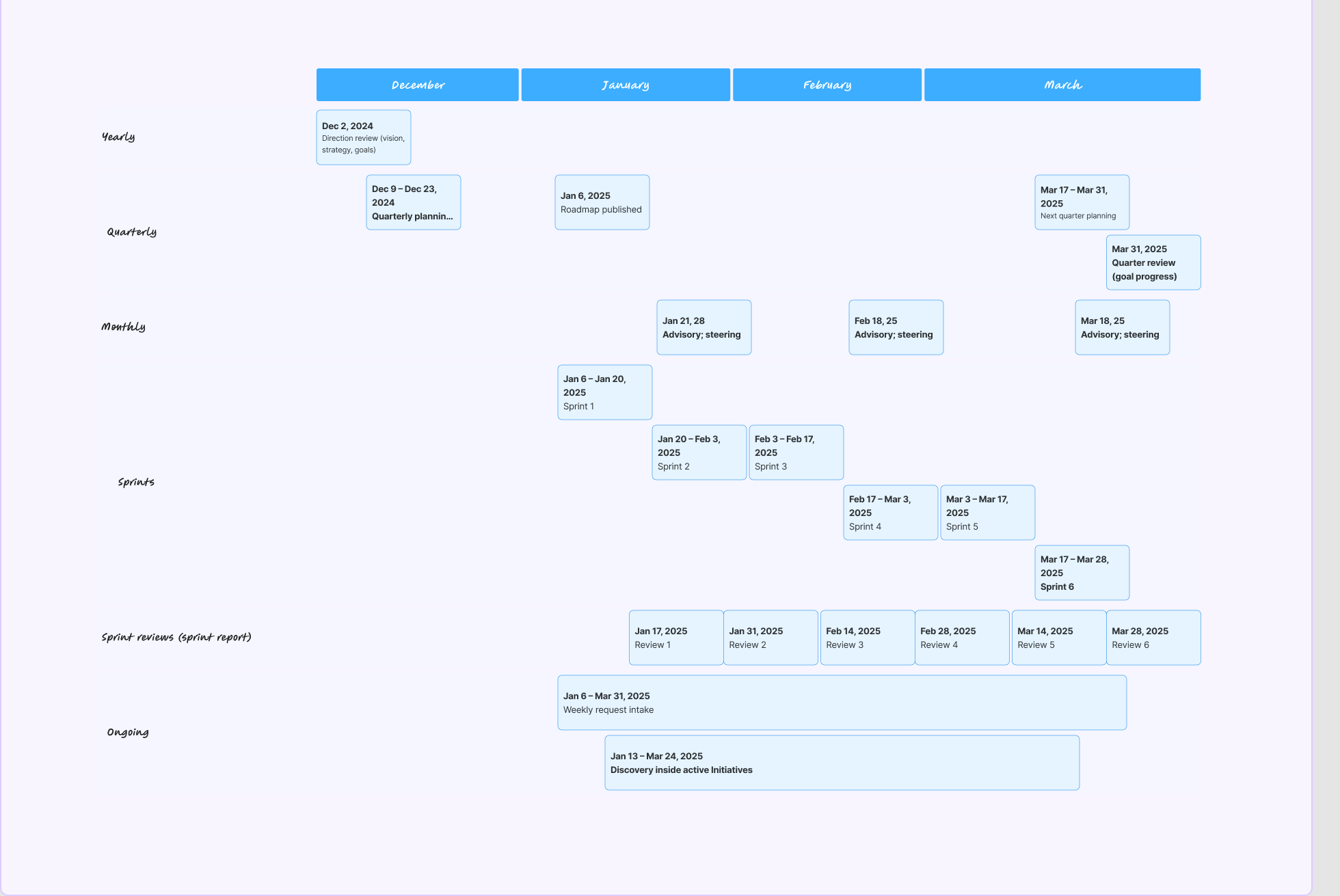
Six cadences: yearly, quarterly, monthly, every two-week sprint, weekly, and ongoing. Book the whole year at once. A meeting that keeps moving stops happening.
Who
The product manager owns the rhythm and runs the yearly, quarterly and monthly meetings. The scrum master runs the sprint meetings. The product owner runs weekly triage. Everyone else joins the meetings where they decide or do the work.
How it works
Each card answers four questions: why we meet, when, who comes, and what it updates in the roadmap.
Yearly
Direction review
- Why: Check that the vision, strategy and goals still describe what the service is for and what the year should change.
- When: Once a year, two to three hours, timed ahead of budget requests so funding asks follow the strategy.
- Who: Executive steering group, product manager, technical architect. Advisory group invited.
- Updates: Vision and strategy (diagnosis, guiding approach, 3-5 key actions, tradeoffs). Goals for the year, with a starting value for each.
Quarterly
Quarterly planning
- Why: Turn the year's goals into work the team believes it can finish in 12 weeks.
- When: Before the quarter starts. Four half-day sessions with gaps between them for research and dependency work: candidates, sizing, technical maintenance and capacity, commitment.
- Who: Product manager (leads and makes the final call), product owner, scrum master, development team, UX designer and researcher, technical architect, content strategist.
- Updates: Goal progress (current value for each goal). The Now/Next/Later grid: Deliverables in Now, Solutions planned for the next two quarters in Next, Initiatives not yet started in Later. Quarterly commitments, one row per Deliverable or ongoing commitment, split across Strategic, Technical maintenance and Small requests work (50/25/25 by default, set for this quarter's work), with dependencies and handoff dates. Each person commits out loud at the end.
Quarter review
- Why: Look back at our commitments, show the advisory group where the goals stand, and settle hard questions so decisions can be defended.
- When: Last day of the quarter, two hours.
- Who: Product manager, product owner, advisory group. Executive steering group invited.
- Updates: Each commitment marked Done or rolled forward with a note. The quarter's sprint reports closed out. Feedback goes to the idea log for next quarter's planning.
Monthly
The two monthly meetings can run back to back or on separate days. Steering decides; advisory advises. Keep them separate on the agenda so advice isn't mistaken for a decision.
Steering meeting
- Why: Keep leaders current between quarters and settle what the team can't settle alone: blocked dependencies, resources, and changes to commitments.
- When: Monthly, one hour.
- Who: Executive steering group, product manager (leads). Technical architect as needed.
- Inputs: The latest sprint reports and the quarterly commitments.
- Updates: Changes to commitments that the steering group approves. Decisions on escalated blockers and asks, recorded in the sprint report.
Advisory meeting
- Why: Hear from partners and community voices while there is still time to act on it, and check that the work still fits what they see.
- When: Monthly, one hour.
- Who: Advisory group, product manager (leads), product owner. Content strategist and UX designer and researcher as needed.
- Inputs: The roadmap: goal progress, the grid and current commitment status.
- Updates: Nothing on the roadmap directly. Feedback goes to the idea log, and concerns about strategic fit go to the product manager for the next planning or steering meeting.
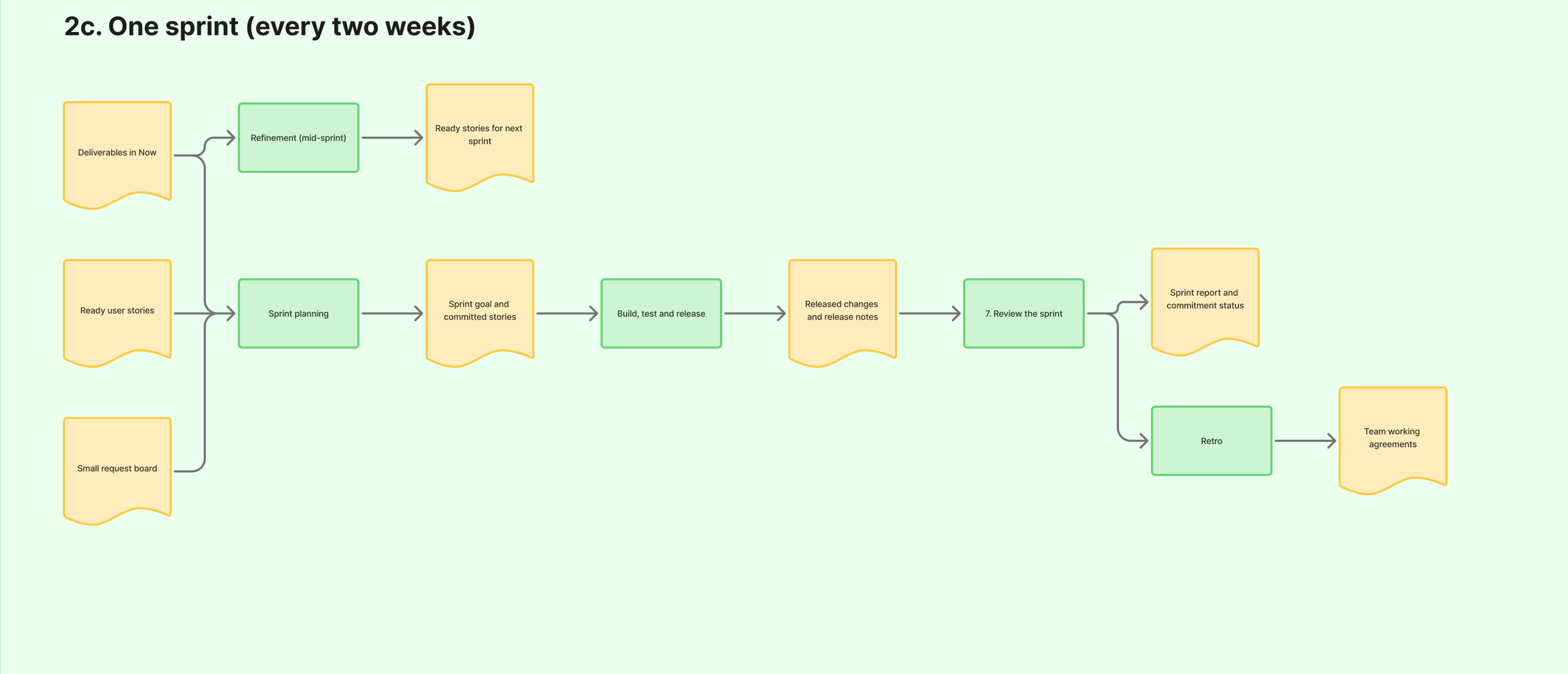
Every sprint (2 weeks)
The team also holds a short daily standup. The team decides its format.
Sprint planning
- Why: Agree on the sprint goal and the stories that get us there.
- When: First day of the sprint, up to two hours.
- Who: Development team, product owner, scrum master. UX designer and technical architect as needed.
- Updates: A new row in the sprint report with the sprint goal and the stories committed.
Refinement
- Why: Slice Deliverables into stories that meet the definition of ready before they reach planning.
- When: At least once a sprint, mid-sprint, one hour.
- Who: Product owner, development team, UX designer and researcher, technical architect, scrum master.
- Updates: Nothing on the roadmap. The backlog under each Deliverable in the Now column gets ready stories.
Sprint review
- Why: Show the work, celebrate wins, look honestly at misses.
- When: Last day of the sprint, one hour.
- Who: Development team, product owner, scrum master, product manager. Stakeholders and the people who will use the work are invited to the demo.
- Updates: The sprint report row: goal met, on track, unplanned work, how to get back on track, committed and completed. Status on each quarterly commitment (Committed, On track, Off track, Done). Release notes for anything shipped.
Retro
- Why: Reflect on how we work and pick one or two changes to try.
- When: Last day of the sprint, after the review, one hour.
- Who: Development team, product owner, scrum master. No managers unless the team asks.
- Updates: Nothing on the roadmap. The team's working agreements.
Weekly
Request triage
- Why: Give every request a home and give every requester an answer.
- When: Weekly, 30-45 minutes.
- Who: Product owner (leads), product manager, technical architect, content strategist.
- Updates: The Small requests commitment. Each request goes to one of five places: already on the roadmap, the small request board, the idea log as large or strategic, the idea log as an idea for improvement, or will not do. Then someone tells the requester.
Ongoing
Discovery
- Why: Learn what problems people have before we commit to building anything.
- When: At least one conversation with users a week, plus working sessions as the work needs them.
- Who: Product manager, UX designer and researcher, content strategist. Developers join some sessions.
- Updates: Each Initiative's Solutions field (what was tried and learned), and the grid as Solutions are chosen or dropped.
Enable
- Why: Help staff and partners use what we release, and hear what is not working.
- When: Around each release, and a monthly check-in with key stakeholders.
- Who: Content strategist, product owner, UX designer and researcher, partner champions.
- Updates: Commitments for training and handoff work. Feedback goes to the idea log.
Copy this card for any meeting the team adds.
| Field | What goes here |
|---|---|
| Meeting | Name |
| Cadence | Yearly, quarterly, monthly, every sprint, weekly, or ongoing |
| Why | One or two sentences. If you can't write it, don't hold the meeting. |
| When | Day, time, length |
| Who | Who decides, who attends, who is optional |
| Inputs | What people read or bring |
| Agenda | 3-5 items |
| Updates | The roadmap section or artifact this meeting changes |
| Afterward | Who hears about the outcome and how |
Rules of thumb
- Team meetings are how we coordinate and improve. Count them as an investment in the team, and plan capacity with them in it.
- Every meeting should change something you can point to. If a meeting updates nothing and decides nothing, cut it or merge it.
- In quarterly planning, feedback on whether we picked the right priorities is welcome, and it applies to future quarters. This week we scope, size and commit.
- A commitment is a promise to try. Some misses are assumed. Say early when you can't deliver.
- Protect focus time and time with users. Book both on the calendar like any other meeting.
- The first quarter will feel like a lot. Remember 10% and repeat. Practice is how the rest sticks.
Taught in
- How We Run a Sprint · Practice: sprints and the sprint report, 21 slides
On the board